
Geen bewerkingssamenvatting |
Geen bewerkingssamenvatting |
||
| Regel 12: | Regel 12: | ||
|start date=2026-03-03 | |start date=2026-03-03 | ||
|end date= | |end date= | ||
|summary=The Seaweed Learning Community unites researchers in the Netherlands working on an alternative marine | |summary=Funding for the community is guaranteed until September 2026 through NWO-KIC funding for Aquatic Food Production. Our consortium projects are: From Sea to Society, CircAqua, Seaseeds, FloatingFuture, SeaSolve and ProSeeds.|image=NIOZ.jpg|contact button link=Contact(Seaweed_Learning_Community)|contact button text=Contact|lead=The Seaweed Learning Community unites researchers in the Netherlands working on an alternative marine protein production chain, based on combined offshore seaweed and mussel cultivation in the North Sea.}} | ||
protein production chain, based on combined offshore seaweed and mussel cultivation in the North Sea. | |||
[[File:Seaweed_illustration.png|frameless|548x548px|left]] | |||
== About us == | == About us == | ||
==== Purpose and Working Approach of the Community ==== | ==== Purpose and Working Approach of the Community ==== | ||
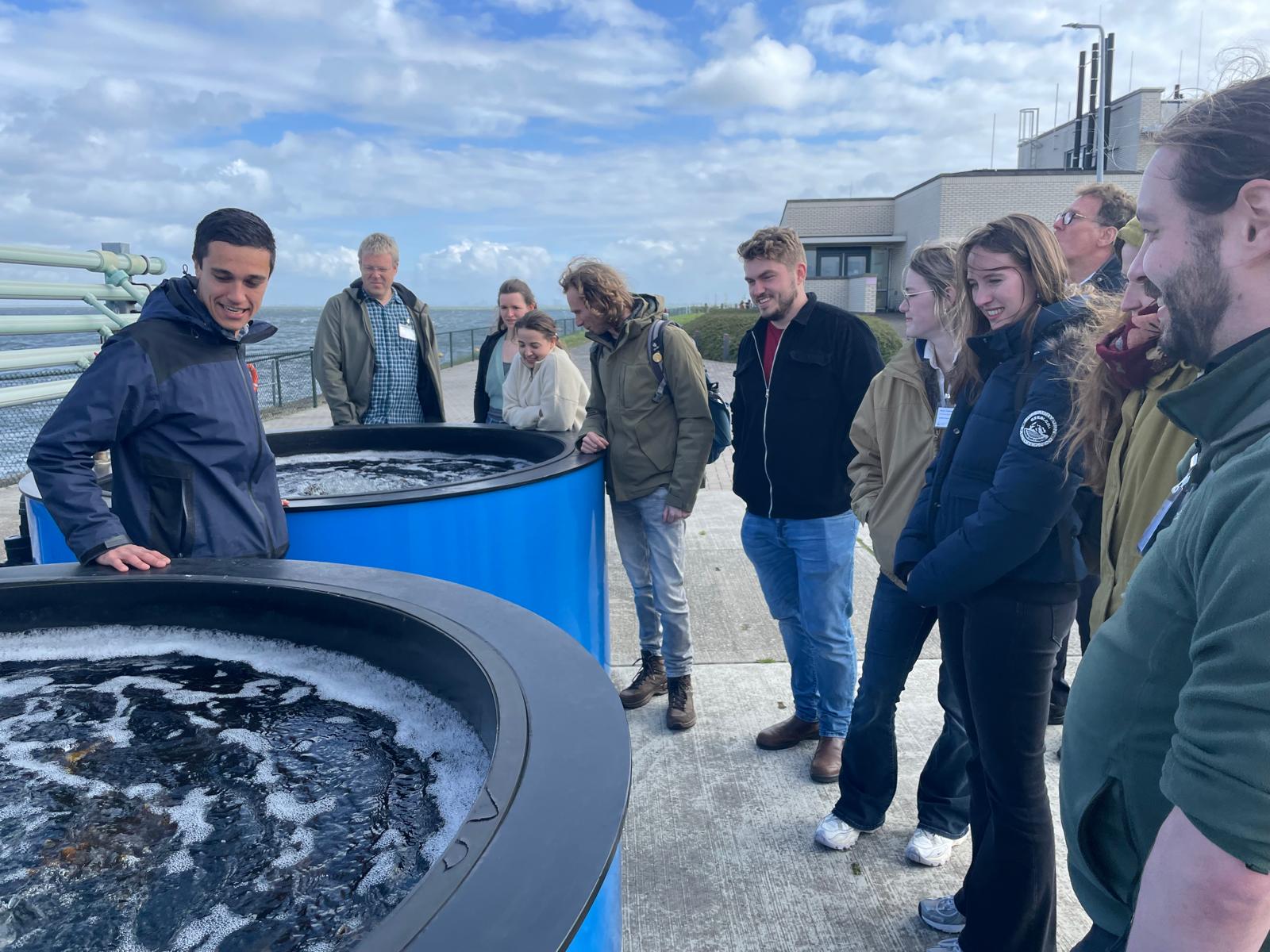
The overall aim of the Seaweed Learning Community is to increase the collective capacity of innovating, working and learning to be able to tackle complex challenges. Members exchange insights and experiences in online and offline meetings. | The overall aim of the Seaweed Learning Community is to increase the collective capacity of innovating, working and learning to be able to tackle complex challenges. Members exchange insights and experiences in online and offline meetings. | ||
Versie van 26 mrt 2026 17:22

About us
Purpose and Working Approach of the Community
The overall aim of the Seaweed Learning Community is to increase the collective capacity of innovating, working and learning to be able to tackle complex challenges. Members exchange insights and experiences in online and offline meetings.
Learning Agenda and Key Themes
Its learning agenda is managed by a steering committee. Topics include
- (a) selective breeding of sugar kelp;
- (b) improved attachment of sugar kelp;
- (c) interactions between mussels and seaweed and their performance in the offshore North Sea;
- (d) the consequences of large scale seaweed culture on the marine ecology;
- (e) innovative biorefinery of seaweed biomass;
- (f) low trophic aquaculture value chains;
- (g) business models for Dutch seaweed;
- (h) consumer acceptance and social innovation;
- (i) governance of cross-sector innovation for circular low trophic aquaculture in the North Sea.
Impact and Knowledge Dissemination
Eventually, breakthroughs will find their way through the learning community to the seaweed and mussel sector workers, the processing industry, retailers, and consumers. The learning community will also translate experiences into educational programmes.