
Copyright 2026 The Garage | Disclaimer | Cookieverklaring | Privacyverklaring
2425 s2 - Circular Economy - Lock gates
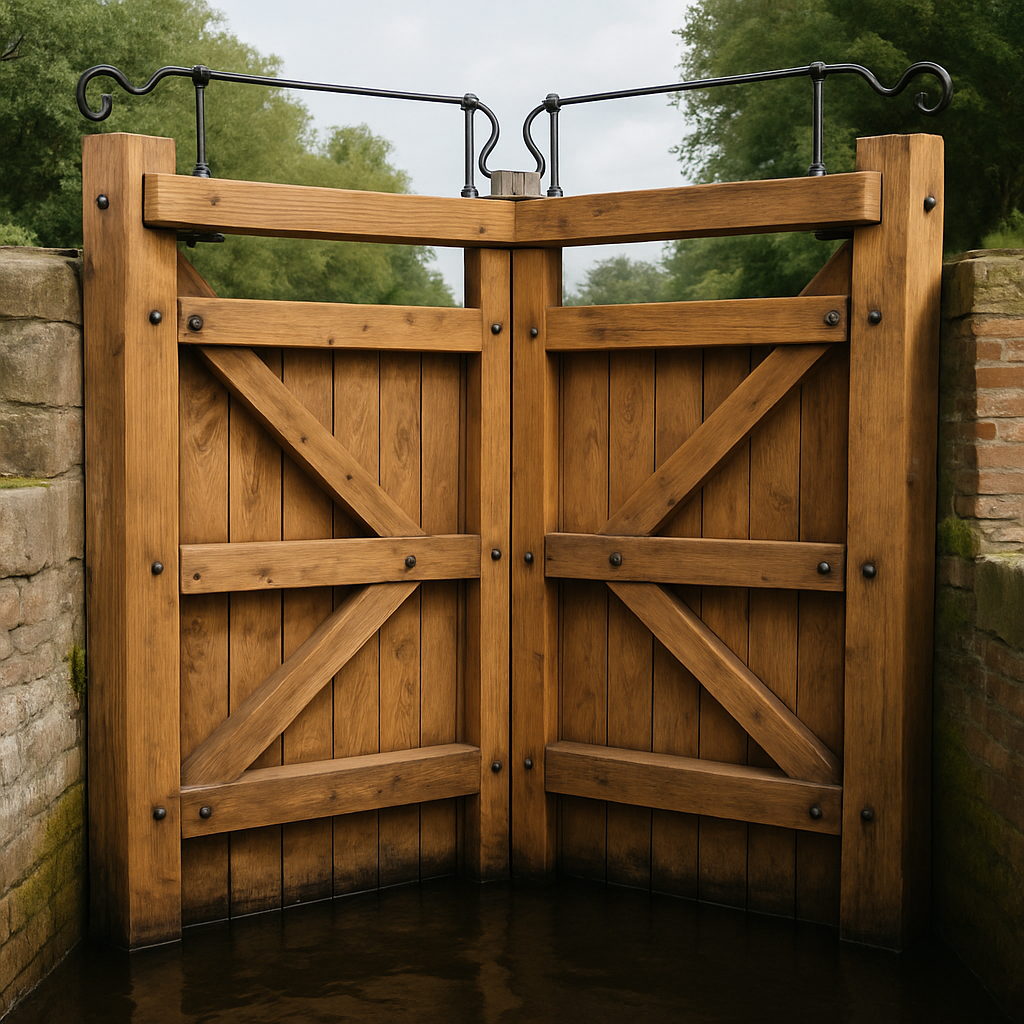
Lock gates are essential infrastructure components within inland waterways, regulating water levels and enabling navigation. The Kennet & Avon Canal, a historically significant and heavily utilised waterway in the UK, relies on a network of lock gates to maintain its operational integrity. Traditionally constructed from oak, these gates are continuously exposed to water, mechanical stress and environmental factors, leading to gradual degradation over time. Given these challenges, it is necessary to explore alternative materials that offer greater durability, reduced maintenance requirements and improved sustainability, whilst ensuring compatibility with existing lock infrastructure and operational processes.
Publication
About this project
| Start date: | |
|---|---|
| Project description: | The principal goal of this research is to identify and assess materials for lock gates that offer optimum performance, whilst minimising maintenance challenges. A Multi-Criteria Analysis (MCA) will be employed to evaluate materials based on durability, sustainability, cost, manufacturability and maintenance implications.
The specific objectives are: Assess the current condition of lock gates on the Kennet & Avon Canal to identify key deterioration patterns and maintenance challenges. Evaluate alternative materials based on strength, longevity and resilience in a waterway environment. Examine best practices and alternative methods used across the industry to determine if applicable. Analyse maintenance implications, including repair frequency, ease of upkeep and lifecycle costs. Engage industry professionals to ensure that findings align with practical engineering and maintenance considerations. Provide evidence-based recommendations for material selection, balancing performance, cost and sustainability. Given the limited time frame, the exploratory nature of the research and potential for further projects based on this topic not all objectives may be met within this research project. Research Questions This research is guided by the following overarching question: Which materials are most suitable for lock gate construction, considering their durability, cost, sustainability and long-term maintenance requirements? To address this question, the following sub-questions will be examined: What are the primary causes of deterioration in existing lock gates on the Kennet & Avon Canal? What performance criteria should be used to assess alternative lock gate materials? How do different materials compare in terms of durability, environmental impact and compatibility with existing infrastructure? What are the maintenance and lifecycle cost implications of utilising alternative materials? How can alternative materials be effectively incorporated into current lock gate design and maintenance practices? |
| Outcomes: | The principal goal of this research was to identify and assess materials for lock gates that offer optimum performance, whilst minimising maintenance challenges. Six materials were chosen for this research; all could potentially be made into lock gates. Of the six, four materials are already used for lock gate construction, two have not. The research into these materials was obtained through reading and analysing literature, mostly scientific report, which are referenced directly.
7 Criteria for evaluating materials: 1.Workability & Installation 2.Durability & Service Life 3.Cost & Whole-Life Value 4.Maintenance & Repairability 5.Aesthetic & Heritage Considerations 6.Environmental & Ethical Factors 7.Weight, Buoyancy & Mechanical Properties European Oak scored the highest, indicating that it is the most suitable material for lock gate construction (in its current format) on the KA. Limitation - the MCA did not allow for Composite gates (different materials for different elements. The research confirmed that the current preferred material, European Oak, is the most suitable for lock gates on the KA. However, the results are bias due to limitations of current processes employed and in an ‘idealised’ MCA Tropical Hardwood scored highest. |
| Commissioned for: |