Applied Research (The Garage)


Projects Applied Research

The Applied Research minor is designed for students who want to dive deep into research, exploring specific topics through data collection and analysis. Projects are provided by HZ research groups and lectorates throughout the HZ 3 domains. Students can work individually, in pairs, or in teams of up to five. Depending on the chosen theme and assigned project, the working language may be English or Dutch. Students collaborate closely with HZ researchers and lectorates on a wide range of relevant topics. While the themes vary slightly each semester, students can typically choose from areas such as:

* Energy Transition

* Water Technology

* Biobased Building

* Circular Economy

* Marine Biobased Chemistry

* HZenzor (autonomous HZ boat)

* Climate Adaptation

* Food Innovation

* Innovation in Education

Below you will find the projects our students have worked on or are currently busy with:



Clay tiles
t.b.d.

project

01/09/2025
Hzensor boat
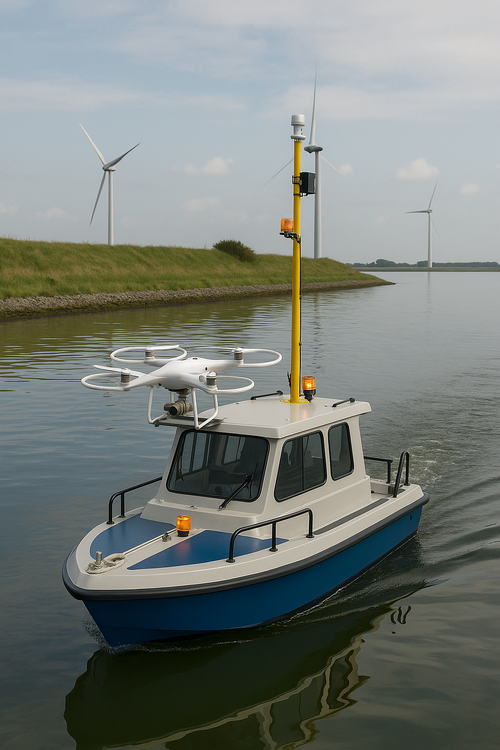
The Sensor drone (Hzensor) is a project boat from DTIW that takes recordings and measurements on waters in the region. With these measurements, the HZ hopes to make improvements in the environment with partners. This is a collaboration between HZ-Engineering and HZ-Watermanagement, with several external partners.

project

03/02/2025
Circuliar economy- Willow Branches
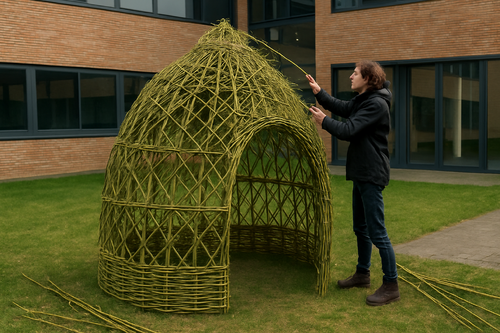
This research explores the potential of using willow as a biobased building material by constructing a willow hut to assess its practicality. The project aims to inspire sustainable design on the HZ campus. Key recommendations include using willow wood for seating, creating shade structures, planting willow hedges to boost biodiversity, and involving students in the process to promote hands-on learning about sustainability.

project

03/02/2025
Circular Economy - Lock gates
Lock gates are essential infrastructure components within inland waterways, regulating water levels and enabling navigation. The Kennet & Avon Canal, a historically significant and heavily utilised waterway in the UK, relies on a network of lock gates to maintain its operational integrity. Traditionally constructed from oak, these gates are continuously exposed to water, mechanical stress and environmental factors, leading to gradual degradation over time. Given these challenges, it is necessary to explore alternative materials that offer greater durability, reduced maintenance requirements and improved sustainability, whilst ensuring compatibility with existing lock infrastructure and operational processes.

project

03/02/2025
Biobased Building - Cob's water resistance
Cob, a traditional earthen building material, is composed of clay combined with sand, water, and straw. The combination of durability, affordability, and thermal efficiency has made cob construction a popular choice that has been around for centuries. However, the main limiting factor of cob comes from its high water absorption capacity, as it causes the material to break down and erode, leading to reduced durability over time. The porous framework of cob material makes it easily damaged by exposure to rainwater, especially in damp or flood-prone locations. Given the growing emphasis on sustainable and biodegradable materials, research into natural biopolymer-based modifications, such as chitosan and alginate, presents a viable alternative for enhancing the durability and performance of cob in construction applications. The primary goal of this research is to explore how chitosan and alginate modifications affect the water resistance and durability of cob.

project

03/02/2025
2425 s2 - Biobased Wet Cell
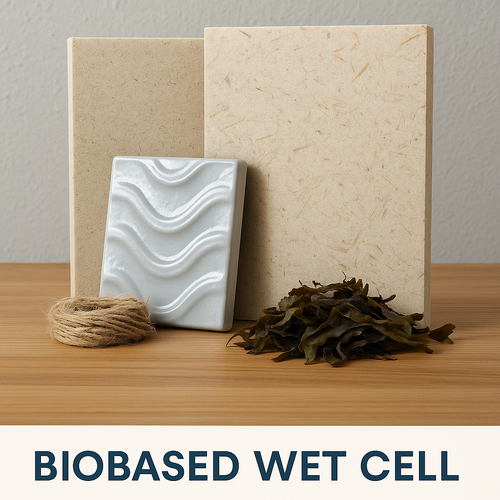
In the Biobased Wet Cell project, researchers are looking to use biobased materials to make water-resistant wall panels for wet rooms, such as a bathroom. Marianna Coelho from the Biobased Building lectorate at HZ University of Applied Sciences is leading the project, which runs until the end of 2025. Biobased Wet Cell develops water-resistant wall panels for humid spaces (e.g., bathrooms) using geopolymeric or alkali-activated materials combined with seaweed-derived alginate and natural fibers. By replacing some sand and gravel with pretreated fibers, the panels become lighter, stronger (flexural strength roughly doubles), and better insulated (thermal and acoustic), while still meeting durability requirements. Alginate acts as a binder, and its extraction is integrated with fiber pretreatment in a single alkaline process—streamlining production and cutting CO₂ emissions. After optimizing geopolymer mixes, prototypes are tested with students and industry partners; a full wet-cell installation will follow, preparing this biobased solution for real-world use. This RAAK SME–funded project fosters collaboration between knowledge institutions and companies to advance sustainable building materials.

project

03/02/2025
Water Technology - Hydroponic system
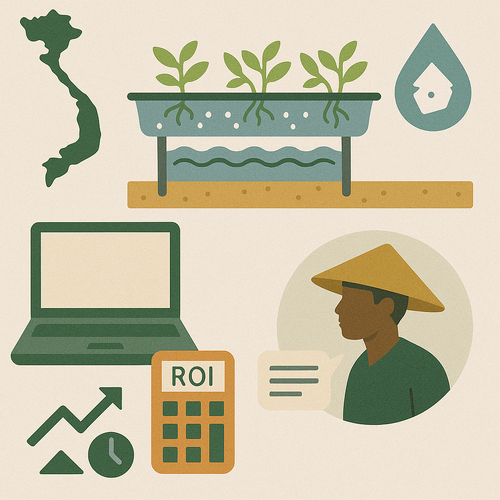
This research focuses on evaluating the financial viability of an open-field hydroponic system developed by the Mekong Saltlab to address the challenges faced by farmers in the salinity affected Mekong Delta, in Vietnam. A custom Excel tool was designed to calculate critical financial metrics such as Return on Investment (ROI) and payback period using real-world data. To complement this quantitative analysis, qualitative insights were collected through an interview with a farmer implementing the system.

project

05/02/2024
Hzensor boat - propulsion system
The objective of the entire HZenzor project is to develop an autonomous drone that cheap, by being good enough to get the job done. The goal for this stage of the project is to increase reliability through, but not limited to, the installation of a new propulsion system.

project

05/02/2024
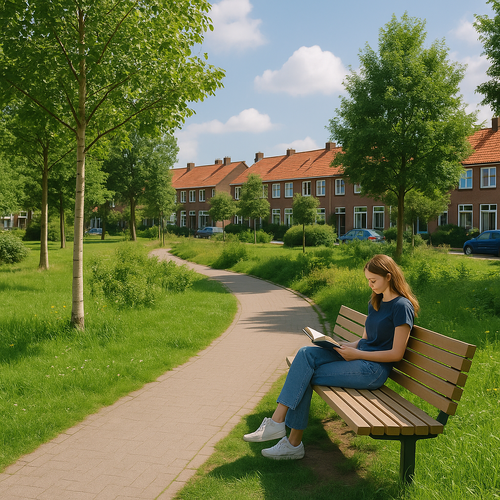
Climate Adaptation - Cooling neighborhoods
Europe is warming at twice the global average, posing risks to public health, productivity, and urban ecosystems. The Cool Neighbourhoods project aims to mitigate heat stress by transforming 30,000 m² of public space through greening initiatives, enhancing health, recreation, and social connections. With €9.3 million in funding, including support from Interreg, the project will develop Neighbourhood Heat-Stress Action Plans (NHSAPs) and implement innovative solutions with 12 partners. The research focuses on identifying green, blue, and grey insights and selecting a citizen science method applicable across pilot countries to reduce the heat island effect and improve liveability.

project

05/02/2024
Circulair economy-Biodiversity
How can biodiversity be promoted in the HZ Garden while also enhancing its visual appeal? To explore this question, the student investigated how biodiversity in the garden could be measured, which plant species would both support local biodiversity and make the garden more attractive, and what additional structures could be introduced to boost biodiversity in a visually pleasing way.

project

05/02/2024
Biobased Building - Salt on local clay
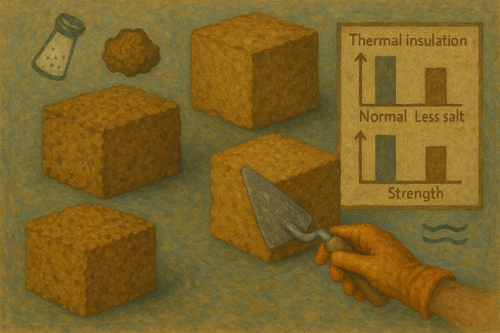
Discover the effects of salt on local clay in the application of earth building (cob) by: comparing results of strength and thermal insulation, between normal and less salt samples, also with effect of humidity.

project

05/02/2024