k Text replacement - "start date" to "start_date" Label: Teruggedraaid |
k Text replacement - "|category=" to "|category group=" |
||
| (2 tussenliggende versies door dezelfde gebruiker niet weergegeven) | |||
| Regel 3: | Regel 3: | ||
|category page = Applied Research | |category page = Applied Research | ||
|category type=Project | |category type=Project | ||
|category=The Garage | |category group=The Garage | ||
|hide title=true | |||
}} | }} | ||
{{Heading | {{Heading | ||
|heading=2425 s1 - Climate Adaptation - Cooling neighborhoods | |heading=2425 s1 - Climate Adaptation - Cooling neighborhoods | ||
| | |start date=2024-02-05 | ||
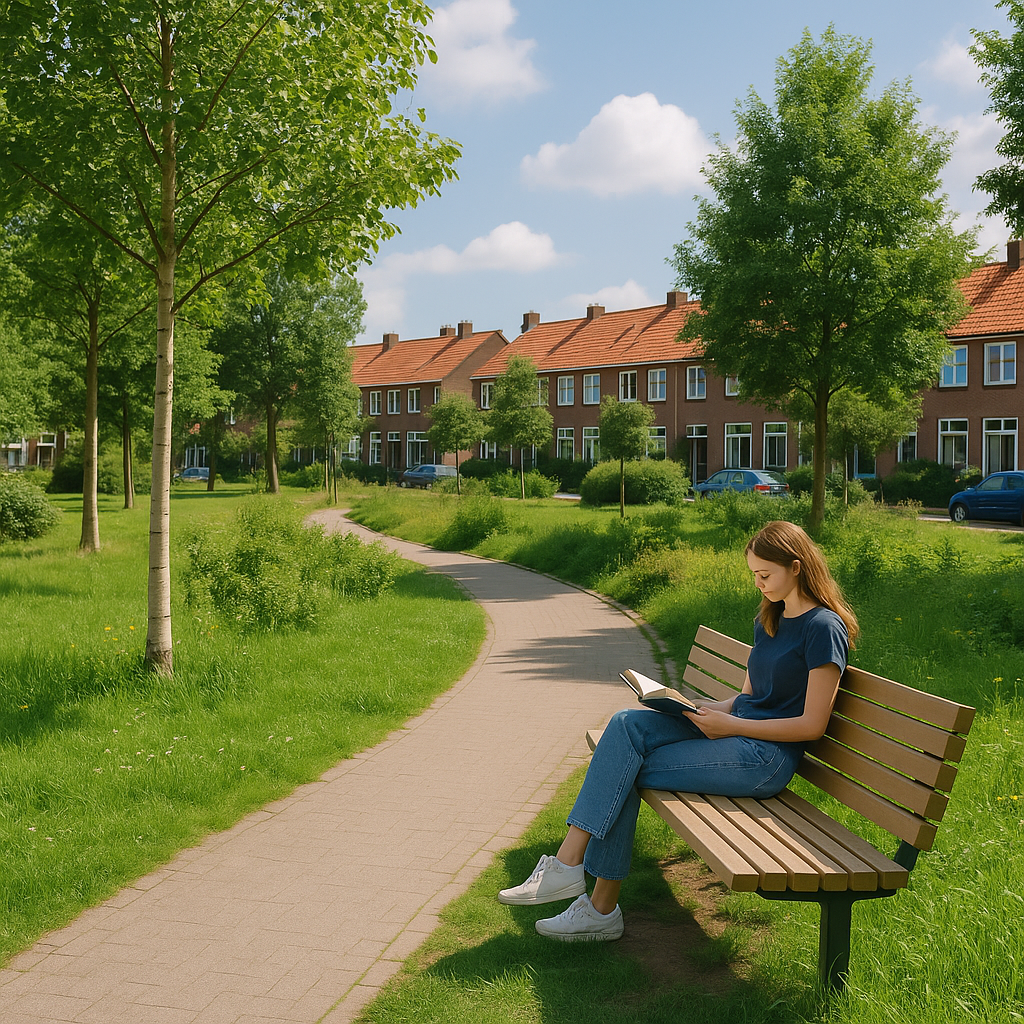
|image=Cool Neighborhood.png | |image=Cool Neighborhood.png | ||
|summary=Europe is warming at twice the global average, posing risks to public health, productivity, and urban ecosystems. The Cool Neighbourhoods project aims to mitigate heat stress by transforming 30,000 m² of public space through greening initiatives, enhancing health, recreation, and social connections. With €9.3 million in funding, including support from Interreg, the project will develop Neighbourhood Heat-Stress Action Plans (NHSAPs) and implement innovative solutions with 12 partners. The research focuses on identifying green, blue, and grey insights and selecting a citizen science method applicable across pilot countries to reduce the heat island effect and improve liveability. | |summary=Europe is warming at twice the global average, posing risks to public health, productivity, and urban ecosystems. The Cool Neighbourhoods project aims to mitigate heat stress by transforming 30,000 m² of public space through greening initiatives, enhancing health, recreation, and social connections. With €9.3 million in funding, including support from Interreg, the project will develop Neighbourhood Heat-Stress Action Plans (NHSAPs) and implement innovative solutions with 12 partners. The research focuses on identifying green, blue, and grey insights and selecting a citizen science method applicable across pilot countries to reduce the heat island effect and improve liveability. | ||