|
|
| (36 tussenliggende versies door dezelfde gebruiker niet weergegeven) |
| Regel 1: |
Regel 1: |
| | | {{Concept |
| {{Project GRG Project config}} | | |parent=Applied Research (The Garage) |
| {{Project | | |category page = Applied Research |
| |Name=2425 s1 - Climate Adaptation - Cooling neighborhoods | | |category type=Project |
| |Part of=PR 00710 | | |category group=The Garage |
| |Start date=2024-02-05
| | |hide title=true |
| |Imagename=Cool Neighborhood.png | | }} |
| |Summary=Europe is warming at twice the global average, posing risks to public health, productivity, and urban ecosystems. The Cool Neighbourhoods project aims to mitigate heat stress by transforming 30,000 m² of public space through greening initiatives, enhancing health, recreation, and social connections. With €9.3 million in funding, including support from Interreg, the project will develop Neighbourhood Heat-Stress Action Plans (NHSAPs) and implement innovative solutions with 12 partners. The research focuses on identifying green, blue, and grey insights and selecting a citizen science method applicable across pilot countries to reduce the heat island effect and improve liveability. | | {{Heading |
| |Supercontext=PR 00710
| | |heading=2425 s1 - Climate Adaptation - Cooling neighborhoods |
| |Topcontext=PR 00709
| | |start date=2024-02-05 |
| |Show navigation tree=Nee
| | |image=Cool Neighborhood.png |
| |Show new page button=Nee
| | |summary=Europe is warming at twice the global average, posing risks to public health, productivity, and urban ecosystems. The Cool Neighbourhoods project aims to mitigate heat stress by transforming 30,000 m² of public space through greening initiatives, enhancing health, recreation, and social connections. With €9.3 million in funding, including support from Interreg, the project will develop Neighbourhood Heat-Stress Action Plans (NHSAPs) and implement innovative solutions with 12 partners. The research focuses on identifying green, blue, and grey insights and selecting a citizen science method applicable across pilot countries to reduce the heat island effect and improve liveability. |
| |Show summary=Nee
| |
| |Show sub projects=Nee
| |
| |Show participants=Nee
| |
| |Show sources=Nee
| |
| |Is homepage=Nee
| |
| |Show edit button=Nee
| |
| |Show VE button=Ja
| |
| |Show category label=Nee
| |
| |Show title=Nee
| |
| |Show sidebar=Nee
| |
| |Show extra=Nee
| |
| |GRG_Project_additional_Featured=Nee
| |
| }} | | }} |
| {{Project GRG Project additional | | {{Project detail |
| |Project description=Europe is warming at twice the global average, posing risks to public health, productivity, and urban ecosystems. The Cool Neighbourhoods project aims to mitigate heat stress by transforming 30,000 m² of public space through greening initiatives, enhancing health, recreation, and social connections. With €9.3 million in funding, including support from Interreg, the project will develop Neighbourhood Heat-Stress Action Plans (NHSAPs) and implement innovative solutions with 12 partners. The research focuses on identifying green, blue, and grey insights and selecting a citizen science method applicable across pilot countries to reduce the heat island effect and improve liveability. | | |description=Europe is warming at twice the global average, posing risks to public health, productivity, and urban ecosystems. The Cool Neighbourhoods project aims to mitigate heat stress by transforming 30,000 m² of public space through greening initiatives, enhancing health, recreation, and social connections. With €9.3 million in funding, including support from Interreg, the project will develop Neighbourhood Heat-Stress Action Plans (NHSAPs) and implement innovative solutions with 12 partners. The research focuses on identifying green, blue, and grey insights and selecting a citizen science method applicable across pilot countries to reduce the heat island effect and improve liveability. |
|
| |
|
| Research Question: | | Research Question: |
| Regel 36: |
Regel 24: |
|
| |
|
| Which citizen science method best suits each neighbourhood typology? | | Which citizen science method best suits each neighbourhood typology? |
| |Outcomes=Using tools like GIS, neighbourhoods were mapped to identify green, blue, and grey elements in each pilot area. Analysis shows that densely populated areas with more grey spaces are more vulnerable to heat stress. Field research provided insights from residents, revealing mixed opinions on heat stress impact but a shared desire for more green spaces. To address this, three citizen science methods—participatory, collaborative, and co-produced—were matched to different neighbourhood typologies. The Green Hub aligns with co-produced methods, Inner City suits a collaborative approach, and Social Deprivation benefits most from participatory methods. Combining these approaches enables a deeper analysis of both quantitative and qualitative aspects while uncovering meaningful contradictions. | | |outcomes=Using tools like GIS, neighbourhoods were mapped to identify green, blue, and grey elements in each pilot area. Analysis shows that densely populated areas with more grey spaces are more vulnerable to heat stress. Field research provided insights from residents, revealing mixed opinions on heat stress impact but a shared desire for more green spaces. To address this, three citizen science methods—participatory, collaborative, and co-produced—were matched to different neighbourhood typologies. The Green Hub aligns with co-produced methods, Inner City suits a collaborative approach, and Social Deprivation benefits most from participatory methods. Combining these approaches enables a deeper analysis of both quantitative and qualitative aspects while uncovering meaningful contradictions. |
| |Filename=Posterpresentation 2 AR Cool Neighbourhoods..pdf | | |file=Posterpresentation 2 AR Cool Neighbourhoods..pdf |
| |Featured=Nee
| |
| }} | | }} |
| {{GRG Project Client | | {{Client |
| |Stakeholder=STKH 00515 | | |stakeholder=Lectoraat Resilient Deltas |
| |Contributor=Gebruiker:Jasper van den Heuvel | | |contributor=Jasper van den Heuvel |
| }} | | }} |
| {{GRG Project Client | | {{Client |
| |Stakeholder=STKH 00515 | | |stakeholder=Lectoraat Resilient Deltas |
| |Contributor=Gebruiker:Jean-Marie | | |contributor=Jean-Marie Buijs |
| }} | | }} |
2425 s1 - Climate Adaptation - Cooling neighborhoods
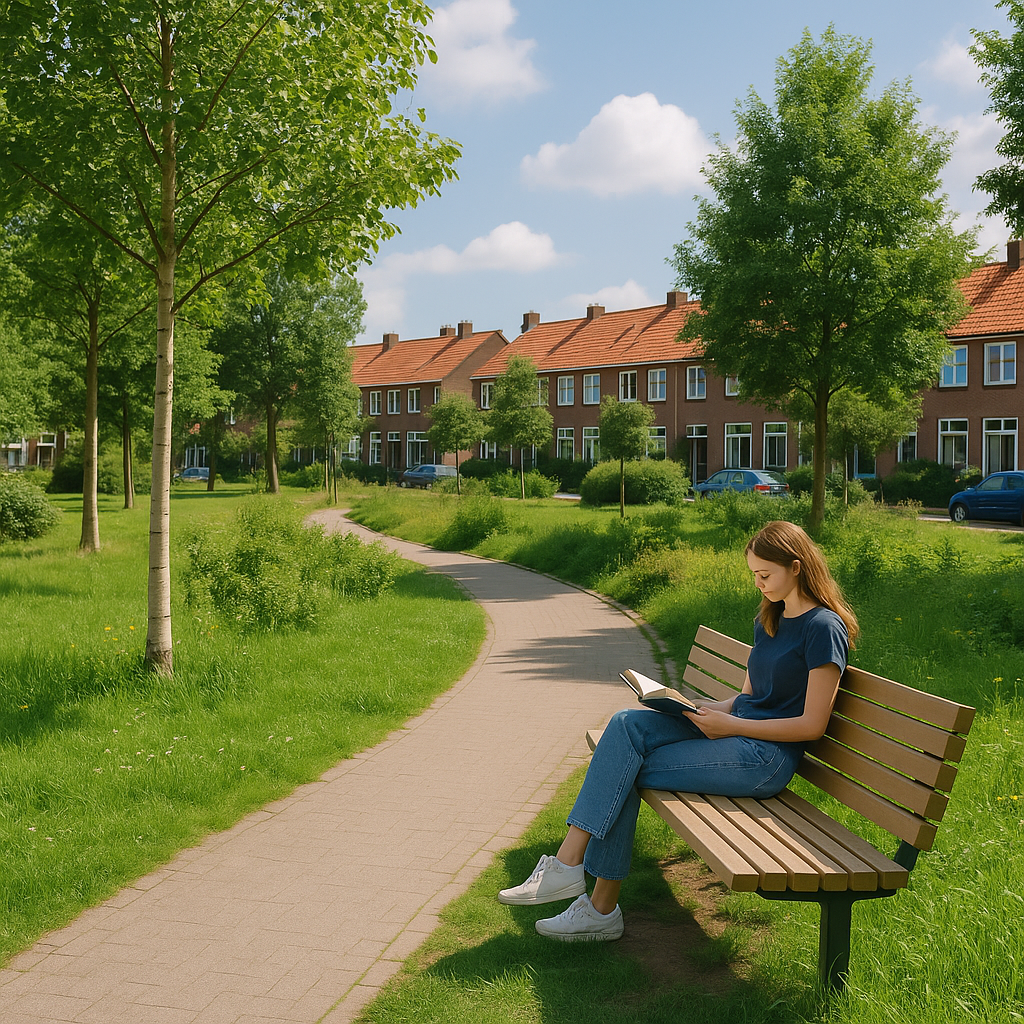
Europe is warming at twice the global average, posing risks to public health, productivity, and urban ecosystems. The Cool Neighbourhoods project aims to mitigate heat stress by transforming 30,000 m² of public space through greening initiatives, enhancing health, recreation, and social connections. With €9.3 million in funding, including support from Interreg, the project will develop Neighbourhood Heat-Stress Action Plans (NHSAPs) and implement innovative solutions with 12 partners. The research focuses on identifying green, blue, and grey insights and selecting a citizen science method applicable across pilot countries to reduce the heat island effect and improve liveability.
Jasper van den Heuvel
(Lectoraat Resilient Deltas)
Jean-Marie Buijs
(Lectoraat Resilient Deltas)