k Text replacement - "Outcomes" to "outcomes" |
k Text replacement - "|category=" to "|category group=" |
||
| (15 tussenliggende versies door dezelfde gebruiker niet weergegeven) | |||
| Regel 1: | Regel 1: | ||
{{Concept | |||
|parent=Applied Research (The Garage) | |||
{{ | |category page = Applied Research | ||
|category type=Project | |||
|category group=The Garage | |||
|hide title=true | |||
}} | |||
{{Heading | |||
|heading=2425 s2 - Biobased Building - Cob's water resistance | |heading=2425 s2 - Biobased Building - Cob's water resistance | ||
|start date=2025-02-03 | |start date=2025-02-03 | ||
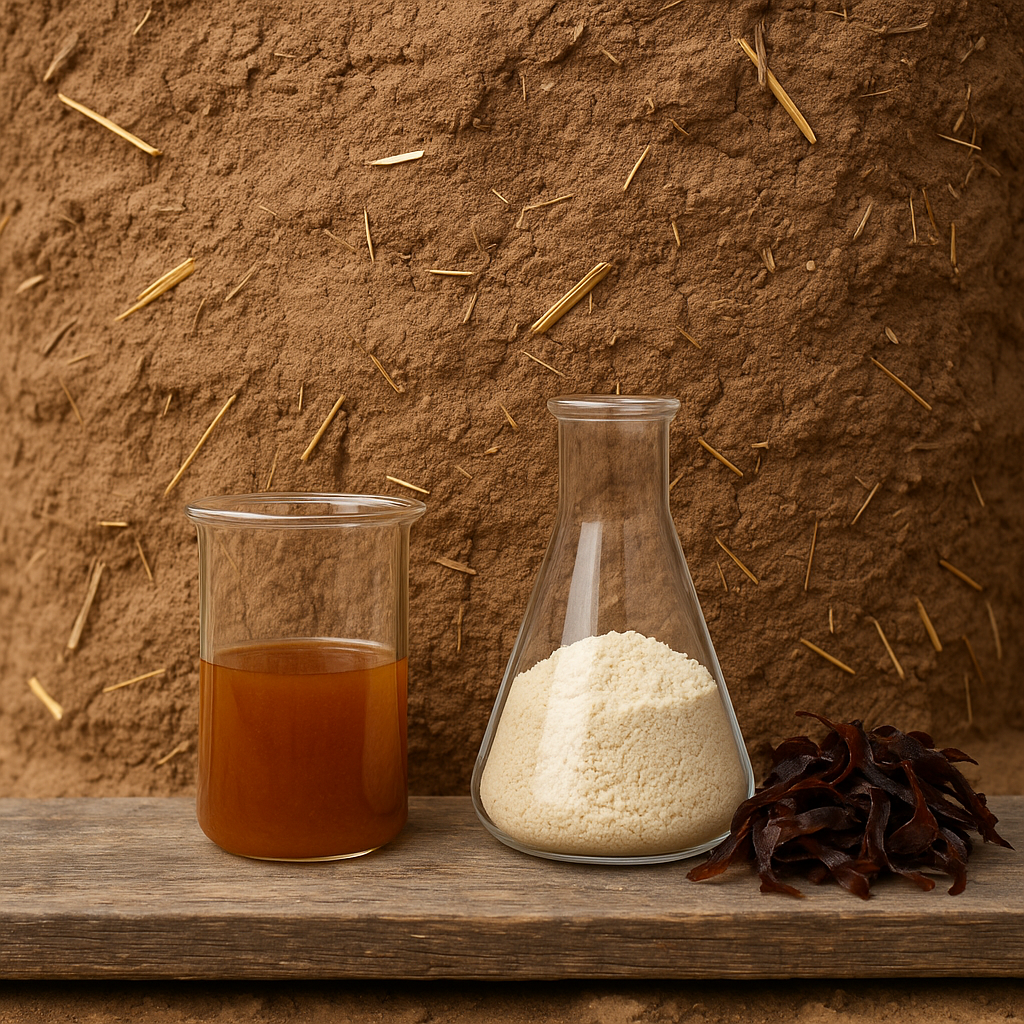
|image=Polymers chitosan and alginate.png | |image=Polymers chitosan and alginate.png | ||
|summary=Cob, a traditional earthen building material, is composed of clay combined with sand, water, and straw. The combination of durability, affordability, and thermal efficiency has made cob construction a popular choice that has been around for centuries. However, the main limiting factor of cob comes from its high water absorption capacity, as it causes the material to break down and erode, leading to reduced durability over time. The porous framework of cob material makes it easily damaged by exposure to rainwater, especially in damp or flood-prone locations. Given the growing emphasis on sustainable and biodegradable materials, research into natural biopolymer-based modifications, such as chitosan and alginate, presents a viable alternative for enhancing the durability and performance of cob in construction applications. | |summary=Cob, a traditional earthen building material, is composed of clay combined with sand, water, and straw. The combination of durability, affordability, and thermal efficiency has made cob construction a popular choice that has been around for centuries. However, the main limiting factor of cob comes from its high water absorption capacity, as it causes the material to break down and erode, leading to reduced durability over time. The porous framework of cob material makes it easily damaged by exposure to rainwater, especially in damp or flood-prone locations. Given the growing emphasis on sustainable and biodegradable materials, research into natural biopolymer-based modifications, such as chitosan and alginate, presents a viable alternative for enhancing the durability and performance of cob in construction applications. | ||
The primary goal of this research is to explore how chitosan and alginate modifications affect the water resistance and durability of cob. | The primary goal of this research is to explore how chitosan and alginate modifications affect the water resistance and durability of cob. | ||
}} | }} | ||
{{Project detail | {{Project detail | ||
|description=Cob, a traditional earthen building material, is composed of clay combined with sand, water, and straw. The combination of durability, affordability, and thermal efficiency has made cob construction a popular choice that has been around for centuries. However, the main limiting factor of cob comes from its high water absorption capacity, as it causes the material to break down and erode, leading to reduced durability over time. The porous framework of cob material makes it easily damaged by exposure to rainwater, especially in damp or flood-prone locations. Given the growing emphasis on sustainable and biodegradable materials, research into natural biopolymer-based modifications, such as chitosan and alginate, presents a viable alternative for enhancing the durability and performance of cob in construction applications. | |description=Cob, a traditional earthen building material, is composed of clay combined with sand, water, and straw. The combination of durability, affordability, and thermal efficiency has made cob construction a popular choice that has been around for centuries. However, the main limiting factor of cob comes from its high water absorption capacity, as it causes the material to break down and erode, leading to reduced durability over time. The porous framework of cob material makes it easily damaged by exposure to rainwater, especially in damp or flood-prone locations. Given the growing emphasis on sustainable and biodegradable materials, research into natural biopolymer-based modifications, such as chitosan and alginate, presents a viable alternative for enhancing the durability and performance of cob in construction applications. | ||
| Regel 33: | Regel 22: | ||
Recommendations include testing long-term performance, effects of different water types, combining coating methods, evaluating mechanical impacts, and better understanding straw’s structural role. | Recommendations include testing long-term performance, effects of different water types, combining coating methods, evaluating mechanical impacts, and better understanding straw’s structural role. | ||
| | |file=Research Poster--Garage Abdinasir.pdf | ||
}} | }} | ||
{{Client | {{Client | ||
| | |stakeholder=Lectoraat Biobased Bouwen | ||
| | |contributor=Marianna Ansiliero de Oliveira Coelho | ||
}} | }} | ||