k Text replacement - "start date" to "start_date" Label: Teruggedraaid |
k Text replacement - "start_date" to "start date" Label: Handmatige ongedaanmaking |
||
| Regel 8: | Regel 8: | ||
{{Heading | {{Heading | ||
|heading=2425 s2 - Circular Economy - Lock gates | |heading=2425 s2 - Circular Economy - Lock gates | ||
| | |start date=2025-02-03 | ||
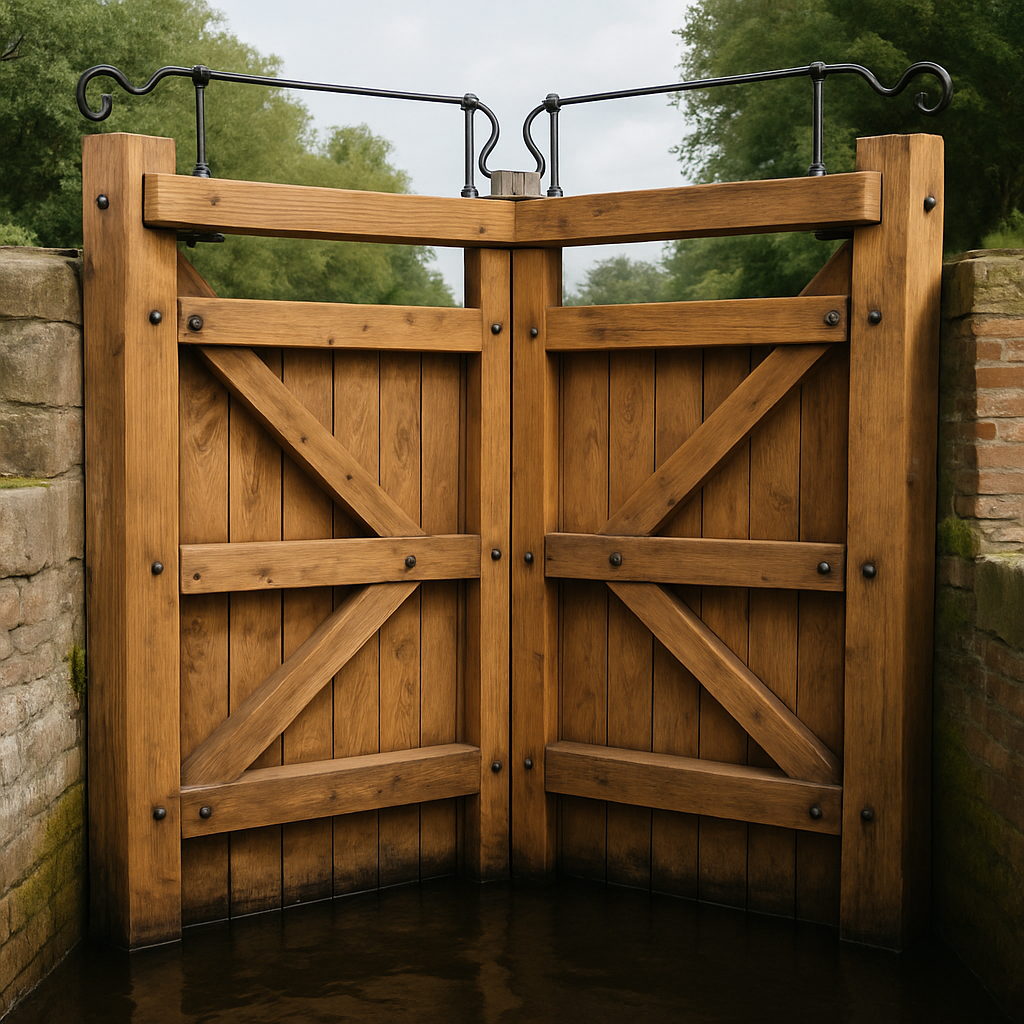
|image=Lockgate.png | |image=Lockgate.png | ||
|summary=Lock gates are essential infrastructure components within inland waterways, regulating water levels and enabling navigation. The Kennet & Avon Canal, a historically significant and heavily utilised waterway in the UK, relies on a network of lock gates to maintain its operational integrity. Traditionally constructed from oak, these gates are continuously exposed to water, mechanical stress and environmental factors, leading to gradual degradation over time. Given these challenges, it is necessary to explore alternative materials that offer greater durability, reduced maintenance requirements and improved sustainability, whilst ensuring compatibility with existing lock infrastructure and operational processes. | |summary=Lock gates are essential infrastructure components within inland waterways, regulating water levels and enabling navigation. The Kennet & Avon Canal, a historically significant and heavily utilised waterway in the UK, relies on a network of lock gates to maintain its operational integrity. Traditionally constructed from oak, these gates are continuously exposed to water, mechanical stress and environmental factors, leading to gradual degradation over time. Given these challenges, it is necessary to explore alternative materials that offer greater durability, reduced maintenance requirements and improved sustainability, whilst ensuring compatibility with existing lock infrastructure and operational processes. | ||